
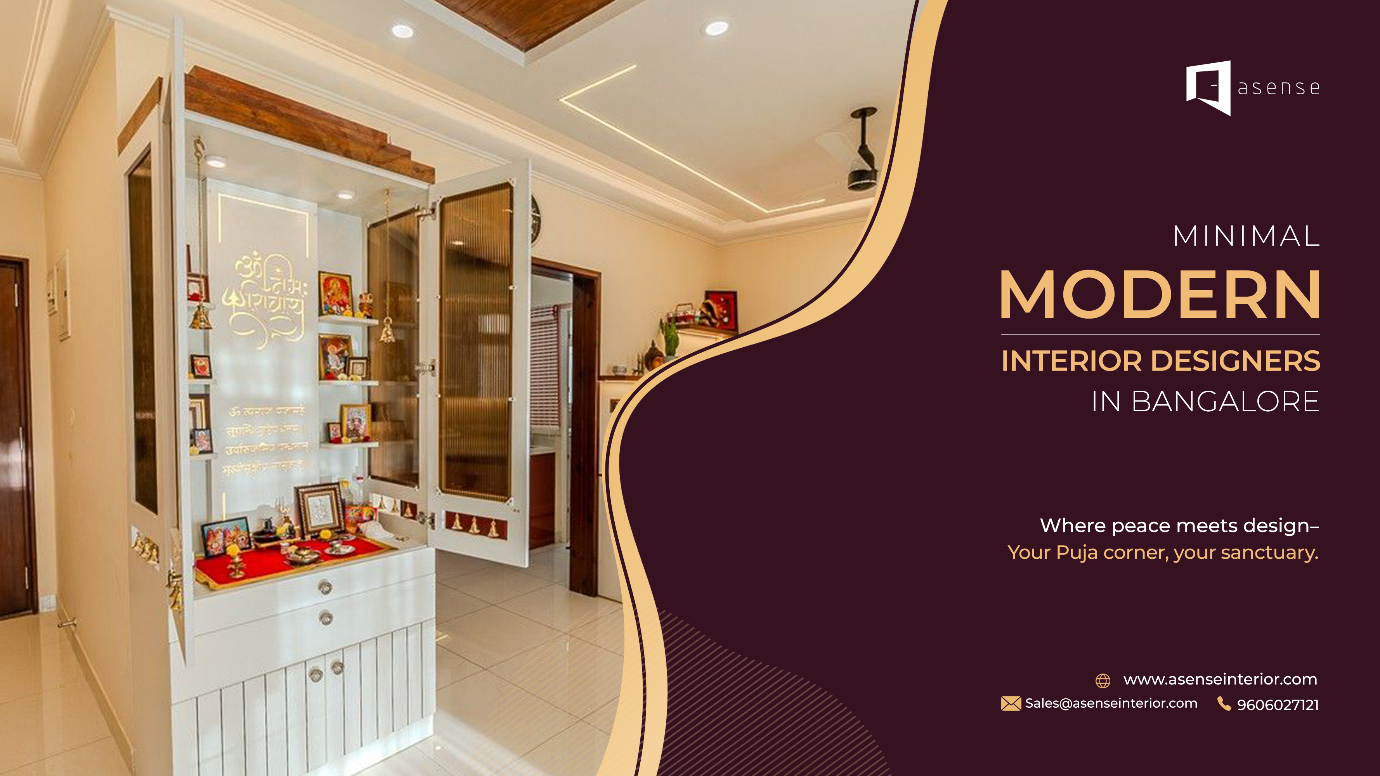
Today’s homes, spiritual spaces are no longer confined to traditional layouts, or heavy decoration. Mandirs are now designed to blend seamlessly into modern living spaces while still retaining its religious significance. From tiny apartments to sprawling villas, home owners are increasingly looking for mandir style solutions that feel calm, minimalist, timeless, and simple. This trend has also brought the design of doors to pooja rooms into the spotlight and has made them a crucial part of modern home interiors.
Experts in home interior designers in Bangalore typically note that a carefully planned pooja space can bring peace and harmony to your entire home. When it is done properly it is an anchor for spirituality and an aesthetic focal point.
Why Modern Mandir Designs Are Gaining Popularity
Modern living requires spaces that are practical as well as clutter-free and lighter. Traditional mandirs, though stunning, often feel too bulky for small spaces. Modern styled pooja room design tackles this issue by focusing on sleek lines, soft materials and efficient utilization of space.
Some reasons homeowners prefer modern mandir designs include:
- Simple integration into dining or living areas.
- Maintenance-free and long-lasting materials
- The flexible layouts of apartments as well as independent houses
- A serene aesthetic that is suited to contemporary decor
Instead of being seen as a separate space, Mandirs of today are designed to be an extension of your home.
Selecting the Best Location for an Modern Mandir
The position of a mandir plays a vital role in both aesthetics and accessibility. Modern homes are often lacking a separate space for prayer, and designers are looking for innovative alternatives. Mandirs that are mounted on walls and corner units or niches that are compact are all common choices.
Professional interior designers company in Bangalore generally recommend an area that is quiet and has minimal movement. Do not place the mandir near bathrooms or under stairs. If you plan it well the smallest of spaces could be turned into a serene prayer space.
Importance of Designer Pooja Room Doors
A properly pooja room door design provides privacy as well as elegantness in the mandir. Modern interiors have doors that aren’t as solid and heavy. Instead, they are designed to let light, airflow and visual consistency.
Popular designer pooja door styles include:
- CNC-cut wood doors decorated with spiritual themes
- Laser-cut metal panels that have a matte surface
- Glass doors that have patterns that are etched or frosted
- Traditional patterns of jali reimagined using contemporary materials
The doors function as a soft partition that allows for a secluded space without closing off the room completely.
Materials that work best for Modern Mandirs
The material selection determines the longevity and look of mandirs. Modern mandir designs emphasize material that will last for a long time and can be maintained easily. Wood is still a popular choice for many, particularly engineered and teak wood, because of its timeless beauty and warmth.
Other materials commonly used are:
- Quartz or marble for the base platform
- MDF with veneer or laminate finishes
- Metal or brass accents for subtle detail
- Backlit acrylic panels to give an ethereal glow
According to experienced Home interior designers in Bangalore, mixing different materials in a controlled manner can create an elegant and balanced appearance without overwhelming the room.
Lighting Ideas to Improve the Spiritual Ambience
Lighting can alter the mood of a pooja venue immediately. Modern mandirs are based on layered lighting instead of a single bright source. Warm LED strip lights that are positioned behind panels or idols create an ambiance of calm, and hidden spotlights emphasize key aspects.
Avoid bright white light, since it could disrupt the serene ambience. Soft lighting does not just enhance the pooja room design but will make the space feel more welcoming during rituals.
Designs Tips to Small Homes and Apartments
Urban homes are often faced with limited space, which makes the need for compact mandir designs crucial. Wall-mounted cabinets with storage beneath are useful and neat. Folding or sliding doors for a pooja room work great in cramped spaces.
The designers from the reputable interior designers company in Bangalore typically recommend vertical designs that utilize wall height to the best advantage. This ensures that the floor space is uncluttered while also providing a dedicated prayer space.
Balancing Tradition with Modern Aesthetics
Modern mandirs aren’t about abandoning the tradition. The symbolic elements such as bells, diyas and traditional carvings can be utilized by subtle means. The key is to use restraint and careful selection.
The neutral color palettes, the minimal ornamentation and clean backgrounds let spiritual elements be prominently displayed. This ensures that the mandir has a sense of sacredness and doesn’t look outdated.
Common Mistakes to Avoid in Mandir Design
In designing a space for pooja the homeowners often focus on aesthetics. Inattention to ventilation, lighting or even the location can impact the daily useability. The mandir that is decorated too much can create a feeling of craziness instead of relaxing.
Professionals such as home interior designers in Bangalore assists in avoiding these errors, and ensures that the mandir is functional, tranquil and visually pleasing.
Conclusion
Modern mandir designs that feature modern pooja room doors reflect how modernity and spirituality can be harmoniously integrated. A carefully planned mandir design improves not only the prayer area but also all the harmony in the house. In Asense Interior, projects focus on strategic layouts, sturdy materials and seamless integration into contemporary interiors. Their strengths are in individualized plan, sensitivity to the spiritual aspect and practical design options that are suitable for urban dwellings. A pooja room that is well-designed is a peaceful retreat from everyday life.
